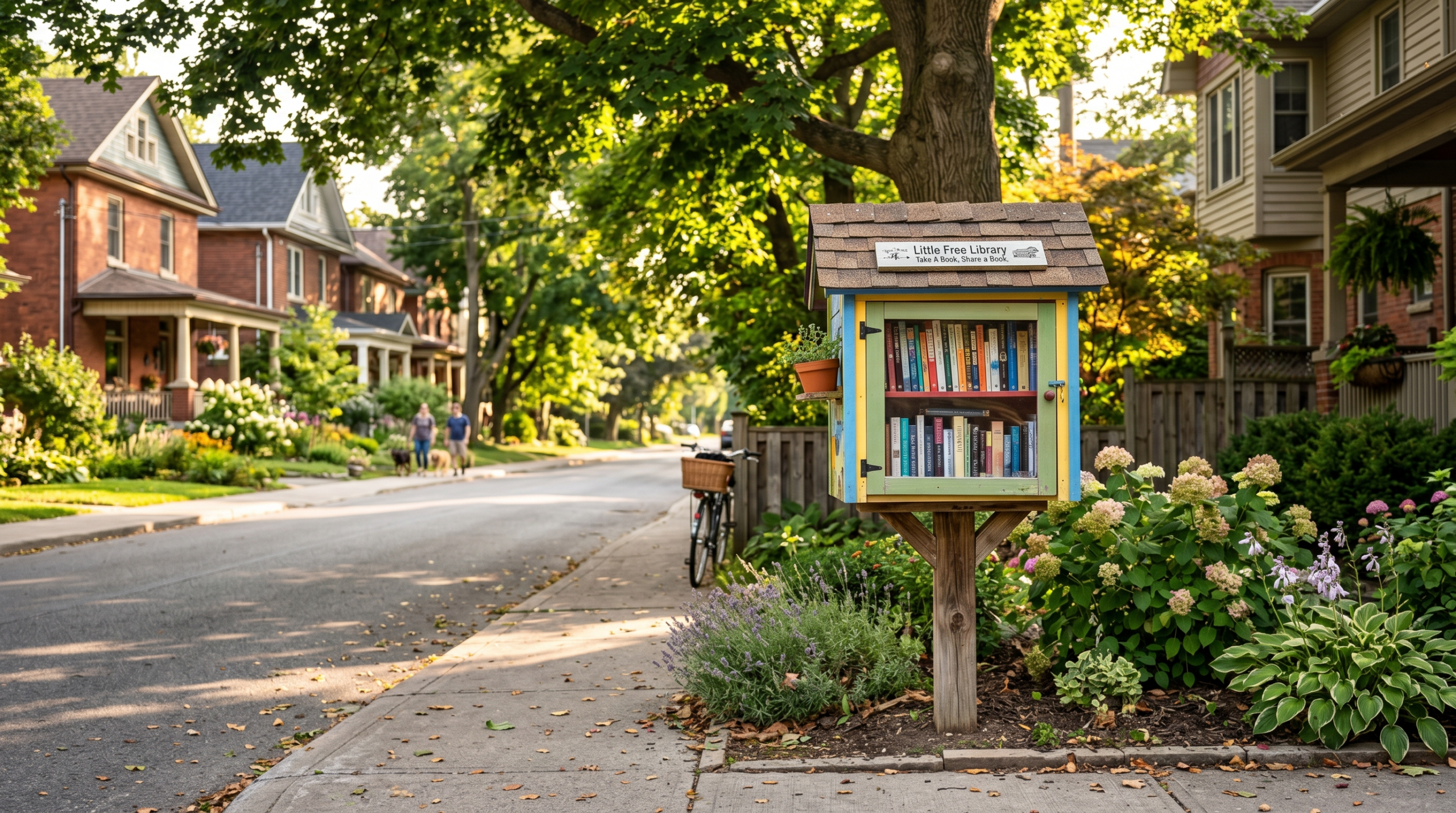
Across the world, neighbors are inventing simple, grassroots ways to care for one another. These small community movements are proof that ordinary people can do extraordinary good.
You may have walked past one without realizing what it was: a little wooden box of books on a quiet street, a brightly painted refrigerator humming on a sidewalk, a small pantry stocked with canned goods near a community center. These are the visible signs of a quiet, hopeful movement — ordinary people organizing themselves to share resources, care for their neighbors, and build stronger communities, no permission or grand institution required. Here’s a look at these wonderful grassroots efforts and why they matter so much.
Little free libraries: sharing the joy of reading
One of the most charming community movements is the little free library — a small, often handmade box where anyone can take a book or leave one behind. The concept is delightfully simple: a tiny, self-service book exchange that runs entirely on trust and goodwill. There’s no membership, no due dates, no fees — just the simple pleasure of sharing stories with your neighbors.
These little libraries do more than circulate books. They become small landmarks in a neighborhood, sparking conversations between strangers, giving children easy access to reading, and creating a sense of shared ownership over a public space. A box of books becomes a gathering point, a quiet invitation to connect. It’s a beautiful example of how a small idea can knit a community closer together.
Community fridges: food shared freely
Another inspiring grassroots effort is the community fridge — a publicly accessible refrigerator, often stocked and maintained by volunteers and neighbors, where anyone can take food they need or leave food to share. Built on the principle of “take what you need, leave what you can,” community fridges help reduce food waste while ensuring that good food reaches people who could use it.
What makes community fridges so powerful is their dignity and simplicity. There’s no application, no questions asked, no judgment — just neighbors helping neighbors directly and respectfully. They turn the abstract problem of food insecurity into something tangible and local that anyone can contribute to. A single fridge on a street corner becomes a daily act of community care.
Pantries, swap shops, and sharing tables
The same spirit shows up in countless other forms. Free little pantries offer non-perishable goods to anyone in need. Swap shops and “buy nothing” groups let people give away things they no longer need to neighbors who can use them. Community gardens grow food to share. Tool libraries lend out equipment so people don’t each have to buy things they’ll rarely use.
All of these share a common thread: they’re built on the radical, hopeful idea that we can take care of one another directly, sharing what we have rather than letting it go to waste. They’re practical, local, and deeply human, and they’re springing up in communities all over the world.
Why these movements matter
These grassroots efforts are about far more than the resources they share. At a time when many people feel disconnected and isolated, these little projects rebuild the social fabric. They create points of contact between neighbors, foster trust, and remind us that we’re part of a community, not just individuals passing one another by.
They also embody a powerful form of hope: the belief that ordinary people, organizing themselves, can make a real difference without waiting for anyone’s permission. You don’t need to be wealthy or powerful to start a little library or contribute to a community fridge. You just need a bit of initiative and a willingness to share. That accessibility is part of what makes these movements so inspiring.
The dignity of mutual aid
One of the most beautiful aspects of these community efforts is the dignity they preserve. Because they’re built on sharing rather than charity in the traditional sense, they treat everyone as both a potential giver and a potential receiver. The same person might leave books one week and take one the next, or contribute to the fridge one day and benefit from it another.
This mutual quality removes the stigma that can sometimes accompany receiving help. Everyone participates as an equal member of the community, giving and taking as their circumstances allow. It’s a model of care rooted in solidarity and shared humanity rather than hierarchy.
How you can get involved
The wonderful thing about these movements is how easy it is to join in. You could:
- Visit a little free library near you — take a book, and leave one you’ve enjoyed.
- Contribute to a community fridge or pantry by donating food you can spare.
- Join a local “buy nothing” or sharing group to give and receive items within your neighborhood.
- Start something small yourself — even a single box of books or shared goods can spark a new point of community connection.
- Spread the word so more people know these resources exist and can both use and support them.
Small boxes, big hearts
In a world that can feel large and impersonal, these little community movements are a deeply reassuring reminder of human goodness. They show that the instinct to share, to care, and to look after one another is alive and well, expressed in thousands of small wooden boxes and humble refrigerators around the world.
So the next time you pass a little free library or a community fridge, take a moment to appreciate what it represents: ordinary neighbors choosing to care for one another, quietly and without fanfare, one shared book and one shared meal at a time. It’s a small thing, and it’s a beautiful thing — and it’s happening all around us.
Want more uplifting perspective? Read our piece on the ways the world is quietly getting better.